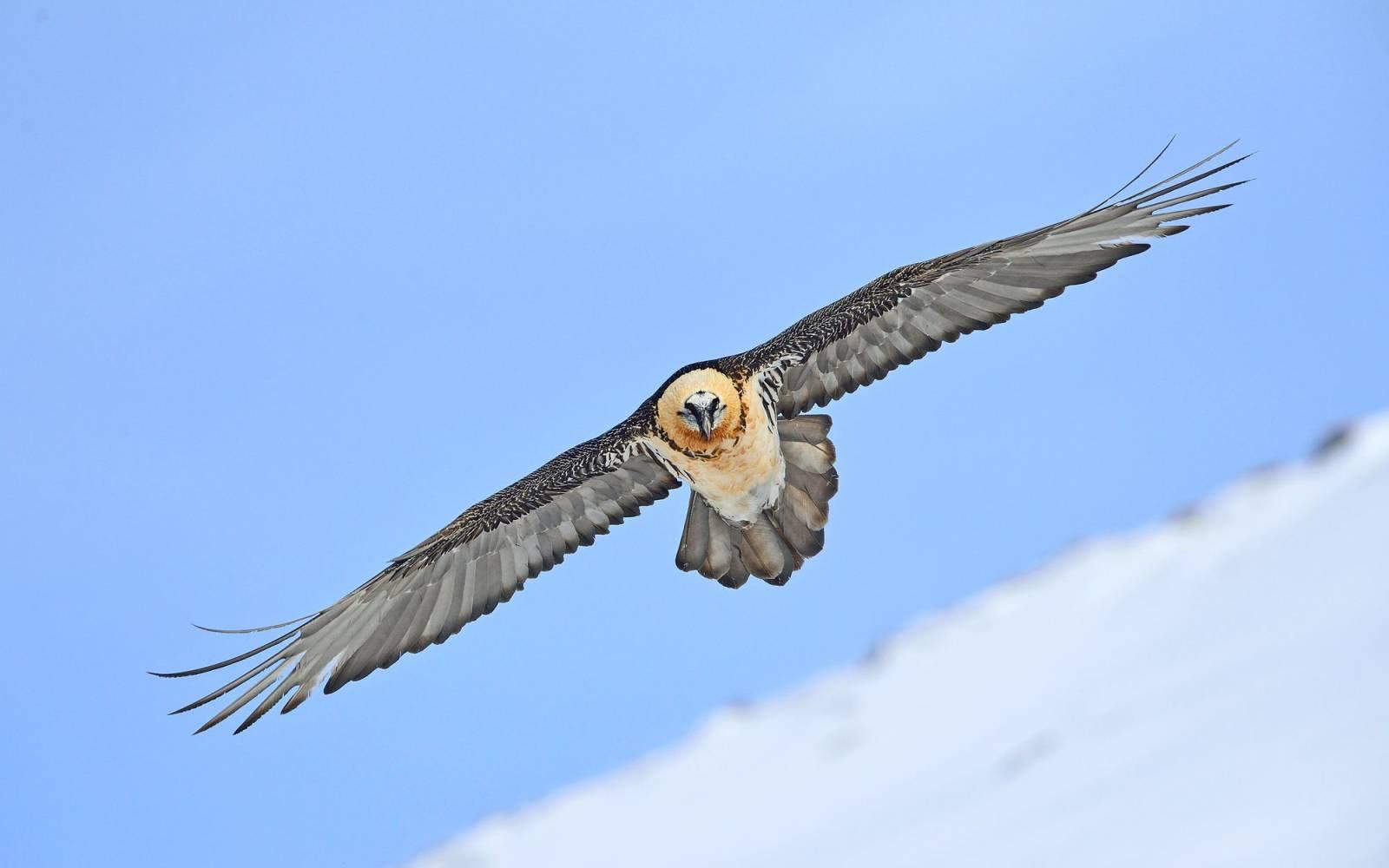
Raise your head and open your eyes...
The bearded gypaete conquers the Alps thanks to the international project of WWF and its partners, which managed to reintroduce these captivating birds. Since the first successful reproduction in 2007, 138 young gypae have taken off in the Alps.
Long perceived as a dangerous predator capable of capturing live lambs, the bearded gypae was intensively hunted, disappearing from the alpine arch in the early 20th century. The WWF, together with other partners, launched a project in 1978 to reintroduce this bird into the Alps. Since then, the organisation has financially and strategically supported the Swiss foundation Pro Gypaète, which manages a breeding, liberation, monitoring and awareness project.
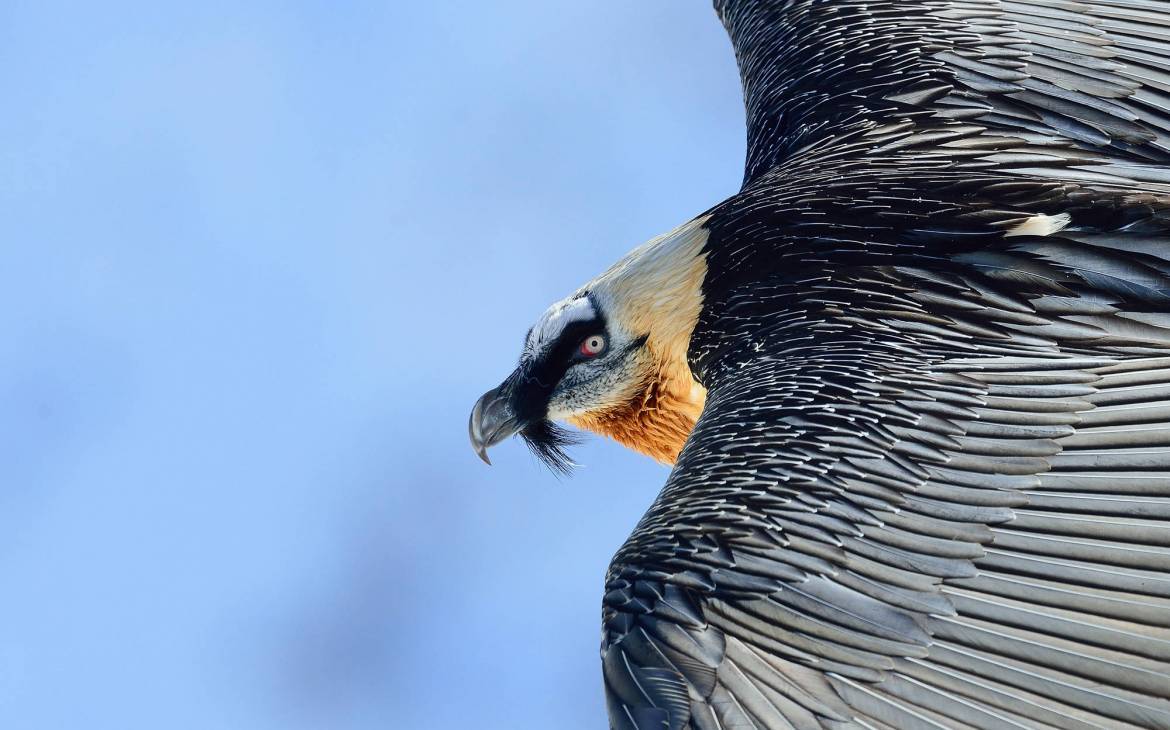
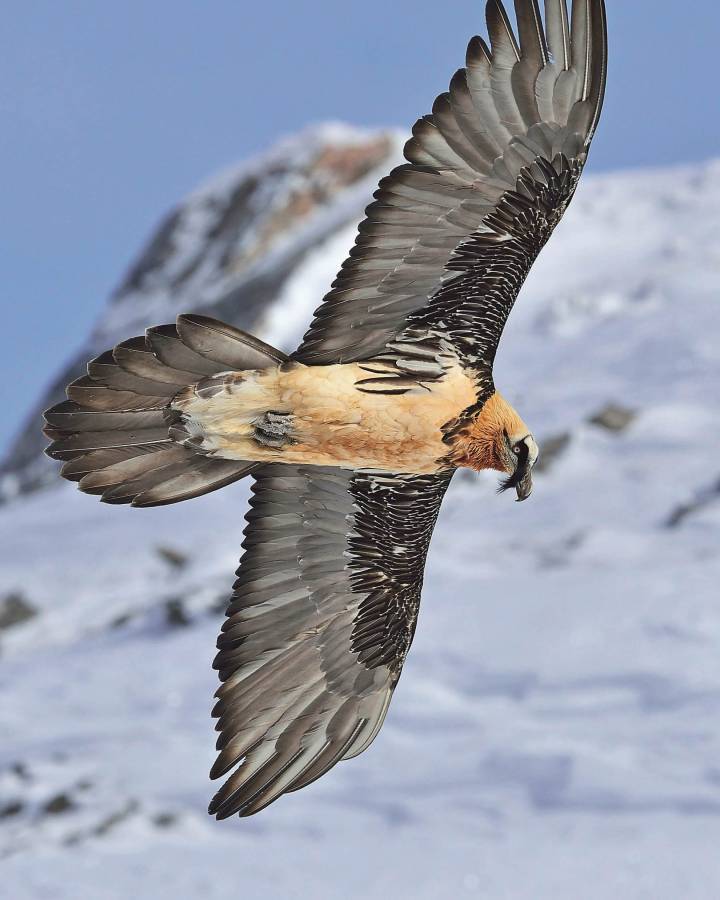
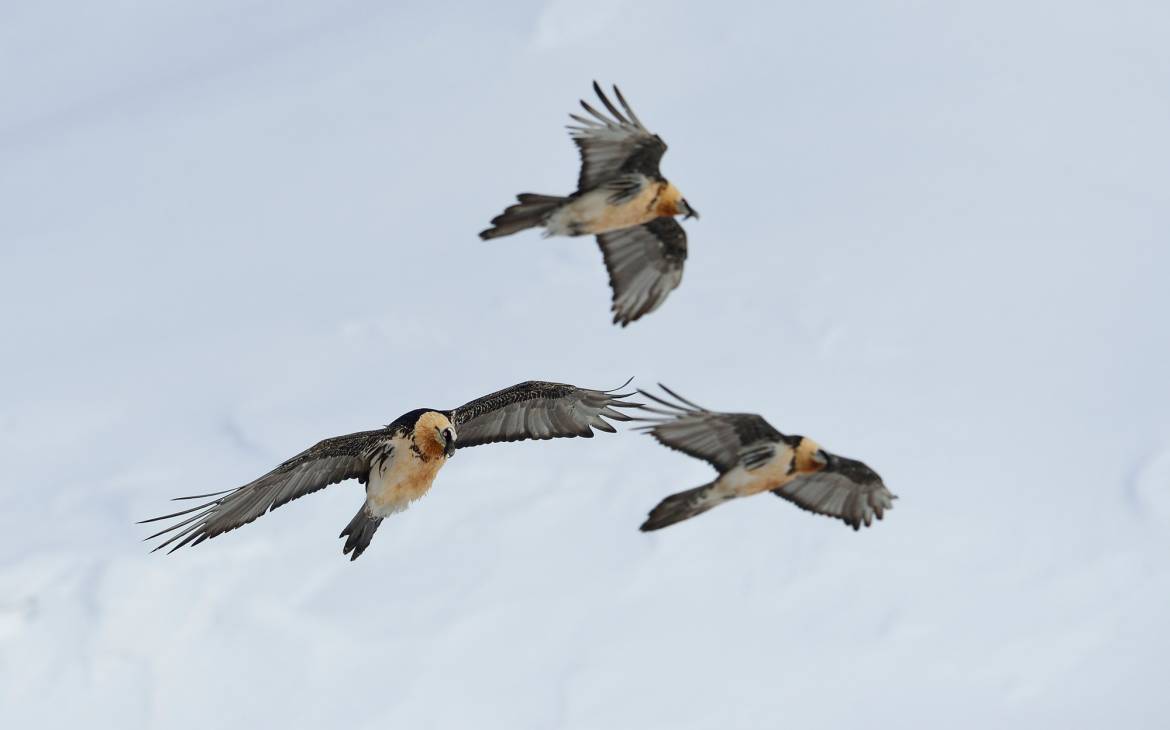
With a wingspan of up to three metres, the bearded gypae is one of the largest birds in Europe.
At present, the Alpine massif is home to more than 220 gypae, distributed between Switzerland, Austria, Italy and France. Many of these reintroduced raptors have reoccurred, with 15 to 20 wild births each year. Despite these successes, further reintroductions are needed to counter the risks of inbreeding.
The bearded gypaetes are released young, even before they can fly, a crucial age for their learning. The reintroduction consists of placing two or three young on a rock fracture, feeding them until they are ready from the nest after two months of monitoring. They are released into the Alps to acclimatize their future territory.
Here at the Refuge du Lake White, a hole of gypae nest in the Doron gorge and a birth was recorded in 2024 !
The program is not limited to the release of birds but also includes regular monitoring, marking on feathers or legs and, for some, installation of small satellite transmitters. These devices allow the Gypaete Pro Foundation to track movements, up to 700 km a day, and nesting sites, collecting essential data to understand and protect this vulnerable population.